Modern advances in dental materials and laboratory techniques make restoring a complete smile more predictable and natural-looking than ever. Removable dentures remain a reliable option for many adults who need to replace several teeth or an entire arch — especially when treatment must balance oral health, tissue support, and practicality.
At the office of Silsby Family Dental, we prioritize fit, function, and facial harmony when designing dentures. Each appliance is crafted to support clear speech, comfortable chewing, and a refreshed appearance while respecting the long-term health of the remaining teeth and supporting tissues.
We approach denture care with the same attention to detail we apply to all restorative treatments: careful diagnosis, patient-centered planning, and follow-up to ensure ongoing comfort and performance. Below, you’ll find a clear overview of why dentures remain a valuable solution and how modern techniques improve outcomes for patients of all ages.
Losing teeth affects more than just your smile. Gaps change how forces travel through the mouth, which can alter chewing efficiency and place extra stress on the remaining teeth. Over time, untreated tooth loss often leads to shifting teeth, changes in bite relationships, and uneven wear that can complicate future dental care.
Appearance and facial support are another important consideration. Teeth help maintain vertical height and support the soft tissues of the cheeks and lips. When teeth are missing, those tissues can lose volume and contribute to a prematurely aged or collapsed appearance. Well-designed dentures restore that support and help maintain natural facial contours.
The psychological and social impact of missing teeth is real. People frequently report greater self-consciousness about eating, speaking, or smiling. Addressing tooth loss with an appropriate prosthesis — whether a partial or a full denture — often restores confidence and makes daily activities easier and more comfortable.
Removable dentures are custom-made prostheses that sit on the gums and replace missing teeth and surrounding structures. They consist of artificial teeth set into a base that conforms to the contours of the mouth. The base is designed to distribute chewing forces evenly while providing a natural-looking tooth arrangement.
Because they are removable, these appliances allow for thorough cleaning of both the denture and the oral tissues beneath it. This accessibility can help maintain gum health and allow easy inspection of any remaining natural teeth. Removability also makes adjustments and repairs less invasive than modifications to fixed restorations.
While fixed options like crowns, bridges, and implants may be appropriate for some patients, a removable denture remains an efficient and adaptable choice for many situations. It can replace a few teeth with a partial appliance or restore an entire arch with a complete denture — often after careful preparation and planning to ensure a stable, comfortable result.
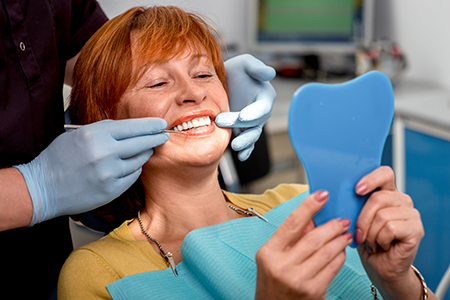
Selecting the most appropriate denture begins with a comprehensive examination of your oral health, remaining teeth, and jawbone condition. The choice between a full denture and a partial denture depends primarily on how many natural teeth can be preserved and whether those remaining teeth are healthy enough to provide support and retention.
Full (complete) dentures replace all teeth in an arch and are designed to fit securely over the gum-covered jawbone. Partial dentures fit around existing teeth and use clasps or precision attachments to stay in place. Each approach has advantages: partial dentures can preserve tooth position and function, while full dentures restore a complete bite and facial support when no teeth remain.
For patients seeking improved stability, implant‑retained or implant‑supported dentures are an important option. Small dental implants provide attachment points that dramatically increase retention and reduce movement, improving comfort and chewing ability. The use of implants can transform the experience of wearing a denture, especially for lower-arch prostheses where stability is often more challenging.
Complete dentures can be made after tissues have healed from extractions or delivered immediately after extractions so patients do not remain edentulous while healing occurs. Immediate dentures offer the advantage of immediate tooth replacement but typically require follow-up relining as tissues remodel.
A conventional full denture is fabricated after the gums have healed following extractions, supporting a more predictable and comfortable fit. Immediate dentures are created in advance and placed at the time of extraction; they provide immediate aesthetics and function but frequently need adjustments as the jaw heals and changes shape.
Overdentures
Overdentures are complete dentures that gain additional stability from existing tooth roots or attachments to implants. Preserving select roots or using implants can improve proprioception and reduce bone loss, while still offering a removable prosthesis.
Implant-Supported Dentures
Implant-supported dentures anchor onto strategically placed implants to minimize movement and enhance chewing performance. Depending on the design, the denture may snap onto attachments or be fixed in place for even greater stability.
Partial dentures fill one or more gaps while using the existing teeth for retention. Modern materials and attachment systems provide options that blend strength with a more discreet appearance than traditional metal clasps.
Design considerations for a partial denture include preserving the health of adjacent teeth, preventing unwanted migration of neighboring teeth, and achieving a restoration that integrates naturally with the patient’s smile. When planned correctly, partial dentures can be a conservative, reversible solution that protects long‑term oral health.
Creating a good denture begins with detailed planning: medical and dental histories, diagnostic imaging, and thorough intraoral assessment guide the design process. Understanding how the jaws come together and how the lips and cheeks interact with teeth is essential to producing a prosthesis that looks natural and functions comfortably.
Material advances have expanded the options for denture bases and teeth, improving aesthetics, stain resistance, and strength. Laboratory techniques, including precise impressions and digital workflows in some cases, allow for consistent results that honor facial proportions and speech dynamics.
Successful denture therapy is also a partnership between patient and clinician. Clear communication about expectations, a careful series of try-ins, and attention to bite relationships all contribute to an outcome that supports daily function and a pleasing appearance.
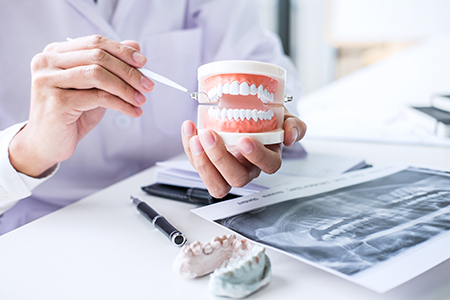
Adapting to a new denture takes time, and initial follow-up visits are part of that process. Minor sore spots, changes in saliva flow, and the need to relearn certain speech sounds or chewing patterns are common in the first days and weeks. Timely adjustments help eliminate pressure points and improve comfort as tissues adapt.
Daily hygiene for both the denture and the mouth is essential. Rinsing and brushing the denture, soaking it when not worn, and maintaining oral hygiene for any remaining teeth and tissues reduce the risk of irritation and infection. Removing dentures at night gives the gums a chance to rest and supports overall tissue health.
Over time, natural changes in jawbone and gum contours can affect fit. Periodic checkups allow your dentist to assess fit and function and recommend relines or adjustments as needed. For implant‑retained prostheses, maintenance also includes regular evaluation of attachment components and implant health.
Stability can often be improved with relines, the addition of attachments, or the conversion to an implant‑retained design when appropriate. Whatever the path, proactive follow-up care helps dentures perform well for many years while protecting the health of the mouth.

At Silsby Family Dental, our approach to denture therapy blends careful clinical assessment with contemporary techniques to deliver durable, comfortable solutions. If you’re considering dentures or need a review of your current prosthesis, our team can explain your options and help you choose an approach that fits your functional needs and lifestyle.
For more information about denture options and what to expect during treatment, please contact us — we’re happy to answer questions and help you schedule an evaluation.
Today, it’s easier than ever to replace missing teeth and achieve natural-looking, durable, and long-lasting results! Depending on a patient’s dental needs, lifestyle, expectations of care, and budget, choices can include conventional fixed bridgework, dental implants, or removable partial and complete dentures. At the office of Silsby Family Dental, we’ll discuss all your options in care and answer all your questions as you choose the solution that’s right for you.
With advances in dental materials and technology, today’s dentures are more comfortable and realistic-looking than ever before.
Whether you wear partial or complete dentures, it’s essential to see the dentist for routine care. Besides checking the fit and condition of your dentures and making any necessary adjustments, you’ll also receive a comprehensive exam to check on the health of any remaining teeth as well as the soft and hard tissues in and around the oral cavity.
A same-day denture offers an accelerated design and fabrication process that allows a patient to go from impression taking to denture insertion in a single day.
For patients who don’t want to wait after having teeth extracted, an immediate denture can be inserted the same day your teeth are removed. Sometime later you may need the denture relined to address any changes in its fit once the extraction sites have completely healed.
While no one wants to drop or break a partial or complete denture, accidents do happen. The good news is that in some cases, your partial or complete denture is reparable. It all depends on the extent of the damage. Don’t hesitate to contact our office if you’ve broken or damaged your denture. We’re happy to help.
The simple act of taking your partial denture in and out can cause certain types of metal clasps to loosen over time. When you come in for your checkup visit or contact our office for an adjustment, we’ll assess the fit of your partial and tighten the clasps for improved stability and comfort.
While rebuilding a complete smile is a worthwhile investment, our office is sensitive to the costs involved in dental care. We customize care and will discuss which treatment options address your needs, lifestyle, and budget. How much a new denture will cost depends on the type of the prosthesis, its design, and the materials used to fabricate the supportive base, teeth, and clasps or precision attachments. Dentures that include the placement of dental implants for added retention and stability typically involve additional costs.
If you have dental insurance, your coverage may include a new or replacement set of dentures. Our staff is happy to review your coverage with you to ensure you are maximizing your insurance benefits while minimizing any out of pocket expenses.
At the office of Silsby Family Dental, we provide an extensive range of dental services, including the latest and most effective methods to help patients with missing teeth rebuild complete and beautiful smiles. As skilled and experienced professionals, we recognize that every patient is different, and every smile is unique. We’re passionate about what we do and take great pride in providing personalized treatment plans while treating our patients as valued partners in care.