
A woman, presumably a medical professional, wearing gloves and a white lab coat, stands behind a machine with a screen displaying images of pills and other medical items, suggesting she is either preparing medication or conducting some sort of medical procedure.

CEREC

The image features a smiling man with blue eyes and facial hair, wearing a plaid shirt, standing against a dark background with a graphic design overlay on the right side that includes text and a logo for a dental clinic named  Cerec .

Same-day ceramic restorations crafted with digital precision for comfortable, efficient care.

Precision Restorations Completed in One Appointment

CEREC® brings together digital scanning, computer-aided design, and rapid chairside milling to produce high-quality ceramic restorations during a single visit. Rather than sending impressions to an external lab and waiting for a return appointment, the full workflow takes place in the operatory, which reduces time in the chair and minimizes the number of office visits required to restore a damaged tooth.

Because the system relies on detailed three-dimensional data captured directly from the mouth, the final restoration fits more predictably and requires fewer post-placement adjustments. Patients benefit from a smoother experience — no temporary crowns, no impression putty, and fewer return appointments — while clinicians gain more control over the final outcome.

When integrated into a practice that emphasizes careful diagnosis and conservative preparation, same-day CEREC restorations can preserve more healthy tooth structure compared with older techniques. This combination of speed and conservative care is why many patients choose CEREC when a fast, durable solution is appropriate.
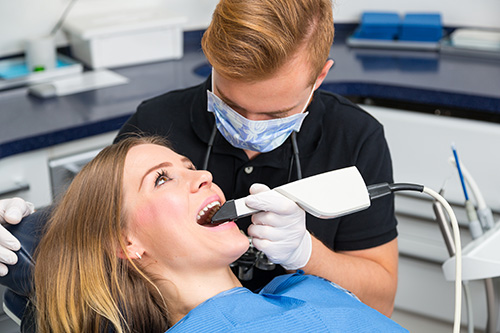
A woman receiving dental treatment from a dentist using a drill, with two different perspectives captured in the composite image.

Digital Impressions: Comfortable, Accurate, and Repeatable

At the heart of CEREC is an ergonomic intraoral scanner that replaces traditional impression materials. The scanner captures accurate, high-resolution images of the prepared tooth and surrounding dentition, creating a virtual model that the clinician uses to design the restoration. Patients frequently comment on the comfort of the scan compared with conventional impressions, and clinicians appreciate the instant feedback the images provide.

The digital impression process also improves communication. Shade selection, shape references, and occlusal relationships are visible on-screen in real time, which helps the dentist make informed decisions before fabrication begins. This transparency reduces guesswork and leads to better-fitting restorations from the outset.

Because the digital records are stored electronically, designs can be reviewed, modified, and reproduced when necessary without repeating the physical impression process. That repeatability supports long-term care and makes future restorative planning more efficient.

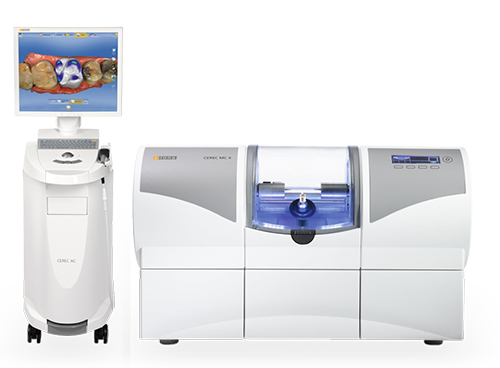
A photograph displaying advanced medical equipment, including a dental scanner, a 3D printer, and a digital display with a tooth model, suggesting technology used for dental care or implants.

From Scan to Seat: Understanding the CEREC Workflow

The CEREC workflow follows a clear sequence: diagnosis and preparation, digital scanning, computer-aided design (CAD), and rapid chairside milling. After preparing the tooth, the clinician scans the area, designs the restoration using specialized software, and sends the design to a milling unit that carves the restoration from a solid ceramic block. Once milled, the restoration is refined, stained or glazed as indicated, and permanently seated that same day.

This streamlined sequence reduces opportunities for lab miscommunication or shipping delays because the team controls every step. The process also allows for immediate verification of fit and occlusion before final bonding, which can reduce follow-up adjustments and improve overall patient satisfaction with the restoration’s function.

For clinicians, the digital workflow supports precise margin management and reproducible design parameters. For patients, it delivers a restoration that balances strength, esthetics, and functional performance without extended treatment timelines.

The image shows a woman with curly hair standing in an office setting, smiling at the camera.

Durability, Esthetics, and Conservative Tooth Preservation

CEREC restorations are milled from high-quality ceramic materials engineered for strength and lifelike appearance. Modern dental ceramics resist wear and can be matched closely to surrounding tooth color and translucency, producing results that blend naturally with the smile. Because the restorations are custom-milled, contours and contacts can be tailored precisely to the patient’s occlusion and anatomy.

Another advantage is the ability to adopt more conservative preparations in many cases. When teeth are restored with adhesive ceramic techniques, less healthy tooth structure often needs to be removed than with traditional full-coverage approaches. That conservative philosophy supports long-term tooth health by preserving enamel and dentin where possible.

As with any restorative material, success depends on appropriate case selection, careful bonding technique, and routine maintenance. When placed correctly, ceramic restorations provide a predictable balance of function and appearance that supports a patient’s oral health goals.

Aftercare, Longevity, and Deciding if CEREC Is Right for You

Post-procedure care for CEREC restorations follows familiar principles: maintain good oral hygiene, avoid extreme chewing forces immediately after placement, and attend regular dental check-ups. Routine brushing and flossing, along with periodic professional cleanings, help preserve the restoration and the supporting tissues. If grinding or clenching is a concern, the dentist will discuss protective strategies to reduce long-term stress on the ceramic.

Candidates for CEREC include patients who need crowns, large fillings, inlays, or onlays and prefer a same-day solution. CEREC is particularly appealing when minimizing appointments is important or when preserving natural tooth structure is a priority. However, every treatment decision should be made within the context of a comprehensive exam and a discussion about restorative goals and long-term prognosis.

At the office of Silsby Family Dental, clinicians combine clinical judgment with digital tools to determine when a CEREC restoration is the most appropriate option. The team reviews material choices, occlusal considerations, and any necessary adjunctive care so patients understand the expected outcomes and ongoing maintenance.

Summary and Next Steps

CEREC technology brings digital accuracy, ceramic materials, and chairside milling together to deliver durable, attractive restorations in a single appointment. The system emphasizes patient comfort, conservative preparation when appropriate, and predictable fit through digital design. For many restorative needs — crowns, inlays, onlays, and certain veneers — CEREC offers a streamlined alternative to conventional lab workflows.

If you’d like to learn whether a CEREC restoration is a suitable choice for your situation, please contact us for more information. Our team can explain the process, review your options, and help plan a path that supports your dental health and esthetic goals.

Frequently Asked Questions

What are CEREC® same-day crowns?

+

Today, there's no need to merely imagine how nice it would be to have a dental crown fabricated in a single visit. With CEREC technology and advanced systems of care, multiple trips to the dentist are a thing of the past! Now, one appointment is all it takes for our skilled and experienced dentist to design, fabricate, and place a naturally beautiful and long-lasting same-day crown. And, best of all, unlike conventional methods of care, you won't have to endure messy dental impressions, wear a temporary crown, or wait weeks for your permanent restoration to come back from the laboratory.

How are CEREC® same-day crowns made?

+

Offering a level of precision and comfort that exceeds conventional methods of care, CEREC technology is nothing short of amazing! Advanced CAD/CAM technology, which stands for computer-aided design and computer-aided manufacturing, enables our dentist to translate images from an optically scan tooth into a 3D virtual model upon which a custom crown can be digitally designed. Once this step is done, the detailed specs are then wirelessly transmitted to a chairside 3D milling machine to fabricate your new ceramic crown while you wait!

What are the benefits of CEREC® same-day crowns?

+

With conventional methods of care, a dental crown can take two to three visits to fabricate and place. However, thanks to the benefits of CEREC technology, we can prepare a tooth, then design, fabricate, and place your new crown, all while you wait.

With CEREC same-day crowns, there's none of the mess of conventional dental impressions, wearing dental temporaries, or waiting for the final crown to come back from the lab. Once the prepared tooth is optically scanned and the restoration digitally designed, your new crown can be milled from the highest quality of dental ceramics that very same visit.

Will my CEREC® same-day crown look natural?

+

CEREC same-day crowns and restorations are fabricated from the highest quality of dental ceramics. Because dental porcelain reflects light in much the same way as dental enamel, your new crown will look flawless, completely natural, and blend seamlessly with your smile.

Do CEREC® same-day crowns last a long time?

+

A CEREC same-day crown offers much more than a convenient approach to getting a dental crown. It is also a high quality, naturally beautiful, extremely durable, and long-lasting dental restoration! The fact is, with proper oral hygiene and routine dental care your new crown will serve your smile well for many years to come.